Tuesday, October 10, 2017

Conveyors Control System For Bulk Materials (RSLogix 5.0)

Back to power plant (CFSPP), Control System of Conveyor for Bulk Materials (coal), takes a half of month to refresh about Ladder and Arena.

The conveyor velocity, cell size, and segment lengths in the Segment module use a common length (meter).

For a nonaccumulating conveyor, when the conveyor stops (to load or unload an entity), all entities on the conveyor stop as well. The original spacing between entities on the conveyor is constant.

When using an accumulating conveyor, the conveyor does not physically stop when an entity is loading or unloading. A local blockage occurs and entities continue to convey until they reach the blockage. At this time, the Accumulation Size is evaluated.

Entities may access one or more cells of a conveyor.

The sum of the distances among the stations on the conveyor (specified by Segment module) must be divisible by the cell size. If not, an error will occur when the model is checked.

During accumulation, the entity will accumulate based on the Accumulation Size specified. This size may be different from the number of cells that the entity originally accessed. If so, the entity will return to its original size when the blockage is cleared and the accumulation dissipates. This size does not have to be divisible into an even number of cells.

The velocity of the conveyor may be changed by using the variable VC(Conveyor).

There are many conveyor status variables, both for accumulating and non-accumulating conveyors. Several common variables are LEC(Conveyor) and NEC(Conveyor) to evaluate the length and number of entities conveying on the conveyor, respectively. Additional accumulating conveyor variables are CLA(Conveyor) to evaluate the length of accumulated entities and NEA(Conveyor) to evaluate the number of accumulated entities.

Saturday, September 9, 2017

LIGHT RAIL VEHICLE DESIGN CHARACTERISTICS

Light rail vehicles are built in a variety of designs and dimensions. In almost all cases, they are capable of being operated in coupled trains. Modern LRVs are generally much larger and heavier than their streetcar predecessors and can have axle loads just as large as, or even larger than, so-called "heavy rail" transit vehicles.

Light rail vehicles vary in the following design characteristics:

  • Unidirectional versus bi-directional

  • Non-articulated versus articulated and, for the latter, the location(s) and configuration of the articulation joints

  • 100% high-floor versus partial low-floor (typically 70% or less) versus 100% low-floor

  • Overall size (width, length, and height)

  • Truck and axle positions

  • Weight and weight distribution

  • Suspension characteristics

  • Performance (acceleration, speed, and braking)

  • Wheel diameter and wheel contour

  • Wheel gauge

These characteristics must be considered in the design of both the vehicle and the track structure.

Tuesday, August 8, 2017

Ways to address the most important security, security and obsolescence challenges

Managing risk ultimately protects your brand and reputation. Your approach to risk management should focus on where the problem originated:

  1. The uniqueness of equipment: Modernizing production systems using the latest control and information technology can help minimize unplanned downtime, support compliance with the latest standards and regulations, and play a key role in managing other areas (quality, safety and security).

  2. Quality: Harness the power of information buried in your operations to improve quality management and help ensure compliance with existing and emerging government regulations.

  3. Safety: Safety must be addressed in three important areas - culture, compliance and capital. The advantage: companies with fewer security incidents have also been shown to improve operational performance.

  4. Security: As you embrace end-to-end connectivity at your facility and company, a comprehensive security approach helps protect people and intellectual property.

Friday, July 7, 2017

Online GPHR Calculator


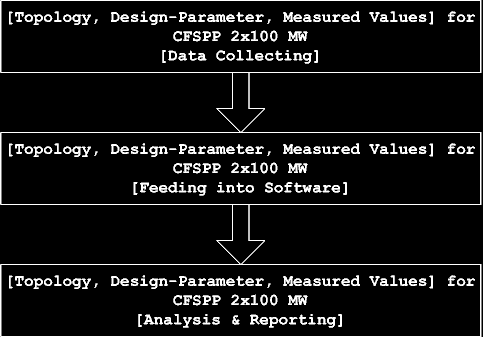
Porting from excel file to web-base for specific calculations of GPHR (Gross Plant Heat Rate), THR (Turbine Heat Rate), STHR (Steam Turbine Heat Rate), NPHR (Nett Plant Heat Rate), Coal Consumption and Thermal Efficiency. Input parameters derived from the heat balance and cycle analysis.


Input

Steam Inlet Turbine  t/h
Steam Inlet Boiler  t/h
Enthalpy Inlet Turbine  kJ/kg
Enthalpy Inlet Boiler  kJ/kg
HHV or LHV  kcal/kg
Boiler Eff  %
Pipe Eff  %
Auxiliary Power  kw  %
Generator Output  kw

Output


Turbine Steam Rate  kg/kwh
STHR aka NTHR aka THR  kCal/kwh  kJ/kwh
GPHR  kCal/kwh  kJ/kwh
NPHR  kCal/kwh  kJ/kwh
thermal efficiency  %
Coal Consumption  t/h  kg/h

Gerry - JCM

Tuesday, June 6, 2017

NEGATIVE SIDES OF BEING HUMAN

Humans are seen as the source of 'evil' and everything undesirable. Why? Because the earthlings almost always had their attention on the negative sides of being human, which needed correcting if we were to win an afterlife and to rise to the higher levels of existence (in some belief systems even exceed that level and achieve nothingness/nibbana/nirvana. That's why a righteous life has always been emphasized. Have you ever thought, and ask yourself why? If the need for this emphasis on a righteous life had a valid reason then the negative aspects of existence must have been dominant on earth in those days.

What does the codebooks say? The supreme being or beings have created the earth especially for man to inhabit. Then they have created the flora and fauna for the benefit of man. Being superior and supreme and being able to hear and see what was going on 'down here' they thought - or humans believed that these beeings must have thought - it would be suitable for them to reside up in the sky, in their own world. After all sun is there with its tremendous power. Moon is there lighting up the night. Myriads of twinkling 'beings' are up there. On top of all that, sky has no connection with land which is 'polluted' with humans, their wrongdoings, weaknesses, and sins. Sky is clean. Fitting the superior ones.

They should stay up there, and not contaminate themselves by mixing with the 'mud' down on earth and make sure that their dirty-sinful 'creation' stayed on course. What course? If they were behind the creation, why did not they make sure those created are all 'good' and righteous? They supposedly have the power, the resolve, the vision etc. to do that and they would have saved themselves from keeping a constant watch over us, the sinners, down here.

If we go back to those aborigines again, have you noticed their sincerity and openness? They call that extremely distant past as 'dream time'. Their sincerity is genuine. They have no qualms about that expression. Why do humans living in present era feel uneasy about how to describe that very distant past? How to present it? What to call it? It is very simple, they should call it a dream time? Full stop!

Friday, May 5, 2017

Tuesday, April 4, 2017

The faithfuls uphold their faith because they are in a constant search for a meaning for their existence

I believe that the search should be based on pure knowledge. That is why I have ventured on this journey, the result of which is presented in this site. It is a journey that follows the progress of the human thought in connection with the concepts of divine order, superior beings, afterlife, paradise, hell, judgment day etc. This journey has nothing to do with the fundamental question: Is there something beyond this world? But it has everything to do with what the human beings thought of themselves and the 'existence' in general.

In this blog I think about the most complex and unbelievable invention of the human mind. You may call it faith or belief or conviction or persuasion. (The choice is yours). Faith necessitates a belief in a realm full of abstract beings, all of them are superior to mankind, and they all have a control on what man does or what happens to him. They are not of this world that we live in. They don't exist in the physical environment which has become a daily experience for the mankind. They are not on the Earth, because man has thought that the Earth was created and reserved for the lowly creatures, amongst whom mankind has a special place. Therefore no one should expect the creator and his entourage to reside amid the lowly creatures.

Thus mankind has established the sky and the celestial spheres as a befitting realm for them, because that realm was thought to be an elevated region. It is somewhere up there but no one knows where precisely. No one in those days was knowledgeable enough to realize that when the Universe is in question there is no up or down. Divine realm is visualized as a place where the supreme creator, the council of divine beings, fairies, demons, angels, satan etc. reside.

Friday, March 3, 2017

SIGNAL EQUIPMENT

SIGNAL EQUIPMENT (Wayside)

  1. Switch Machines
  2. Impedance Bonds
  3. Loops and Transponders
  4. Wheel Detectors/Axle Counters
  5. Train Stops
  6. Switch Circuit Controller/Electric Lock
  7. Signals
  8. Bootleg Risers/Junction Boxes
  9. Switch and Train Stop Heaters/Snow Melters
  10. Highway Crossing Warning Systems (N/A if system is elevated)
  11. Signal and Power Bonding

Thursday, February 2, 2017

The Universe of Divine Entities

The other literal of divine entity's universe is non polarized, some people agree of that statement. No upper, no lower; no evil, no goodness; no light, no dark; no sky, no ground; etc, trancendental, nothing polarized there, only CONCEPTS and GREAT CONCEPTS. I can't imagine about that realm.

The question; If its right there's celestial spheresis that absolutely "non polarized realm", how many books of religion(s) should be revised?

Sunday, January 1, 2017

Five types of light rail transit guideway

Five types of light rail transit guideway configurations to be considered, each with different signaling characteristics:

  1. In-Street Mixed Traffic Right-Of-Way (Streetcar)
  2. Semi-Exclusive Right-Of-Way
  3. Exclusive Right-Of-Way
  4. Highway Grade Crossings
  5. Yard and Shop

The choice of which system is most appropriate for a specific section of track is based on operational and sometimes political considerations. A light rail system may utilize different signal technologies at different locations based on these concerns. A street-running operation at relatively low speeds requires different controls than a high-speed operation on an exclusive right-of-way.

Monday, December 12, 2016

Millions Of Lost Brain

Childhood represents a critical phase in the formation of an individual’s cognitive and emotional framework. At this stage, reflective capacity and the ability to make independent decisions are not yet fully developed. As a result, foundational ideas—including concepts of a supreme being—are often passively absorbed. Within this context, external agents such as parents or societal authorities play a dominant role, frequently through mechanisms of value conditioning that the receiving individual cannot fully recognize. Once these initial schemas are internalized, the process of deconstruction becomes highly complex, requiring advanced analytical abilities to recontextualize them. Thus, young minds that have been imprinted may be described as experiencing a loss of cognitive neutrality.

This phenomenon does not end at the individual level. When projected onto the collective dimension, the same pattern reveals cumulative effects. In the earliest stages of civilization, when human cognitive capacity was still in a pre-reflective phase, systems of belief emerged as frameworks for interpreting reality. The epistemic limitations of that era allowed these ideas to embed themselves deeply. From the first few thousand individuals in early generations, the process expanded to encompass millions of minds, structurally shaping collective thought. What began as a cognitive adaptation ultimately became an ideological foundation passed down across generations.


Jutaan Otak yang Hilang

Masa kanak-kanak merupakan fase kritis dalam pembentukan kerangka kognitif dan emosional seseorang. Pada periode ini, kapasitas reflektif dan kemampuan membuat keputusan independen belum berkembang sepenuhnya. Akibatnya, gagasan-gagasan fundamental—termasuk konsep mengenai entitas tertinggi—cenderung diterima secara pasif. Dalam konteks ini, agen eksternal seperti orang tua atau otoritas sosial memiliki peran dominan, sering kali melalui mekanisme pengondisian nilai yang tidak sepenuhnya disadari oleh individu yang menerimanya. Setelah skema awal tersebut terinternalisasi, proses dekonstruksi menjadi sangat kompleks, memerlukan kemampuan analitis yang matang untuk melakukan rekontekstualisasi. Oleh karena itu, otak-otak muda yang telah terisi dapat dikatakan mengalami loss of cognitive neutrality.

Fenomena ini tidak berhenti pada level individu. Jika diproyeksikan pada dimensi kolektif, pola yang sama menunjukkan efek kumulatif. Pada tahap awal peradaban, ketika kapasitas kognitif manusia masih dalam fase pra-reflektif, terbentuklah sistem kepercayaan yang menjadi kerangka interpretasi realitas. Keterbatasan epistemik pada masa itu membuat gagasan-gagasan tersebut mengakar kuat. Dari beberapa ribu individu pada generasi awal, proses ini berkembang menjadi jutaan otak yang secara struktural membentuk pola pikir kolektif. Dengan demikian, apa yang awalnya merupakan adaptasi kognitif menjadi fondasi ideologis yang diwariskan lintas generasi.

Friday, November 11, 2016

Transit Signal System Design

The system designer is obliged to consider the signaling technology available to provide the desired system operating performance at the least total cost. Within the scope of light rail transit applications, a well-established catalogue of proven technology is available.

Transit signal system design must consider not only what technology is available, but also the most rational combination of equipment for a particular application. Signal systems are customized or specified by each transit system to provide safe operation at an enhanced speed. The location of signal block boundaries is based on headway requirements and other considerations such as locations of station stops, terminals, highway crossings, storage tracks and special interlocking operating requirements.

Selection and spacing of track circuits for AC and DC propulsion systems are influenced by many factors. These include the degree of detection required for broken rails or defective insulated joints, the level of stray current control required, the frequency of interfering sources of power (propulsion and cab signaling), location of cross bonding, unbalance of track circuits, and the inherent advantages of various types of track circuits.

Friday, September 9, 2016

LRT Operating Environment

Design differences in light rail systems are primarily related to their operating environments. Since the latter can vary over a large range, the appropriate level of signal automation varies by transit agency, their operating requirements for speed and headways, and the configuration and alignment of the track system components, including special trackwork. These can vary significantly along a given LRT line. It is not uncommon for an LRT line to be very much like a streetcar along one segment of its route, but have a semi-exclusive or completely exclusive trackway only a short distance further down the track. The optimum level of signal sophistication depends on such local circumstances and is generally determined by the transit agency responsible for providing the service.

While these issues have relatively little effect on trackwork, they have a significant effect on track alignment. Specifically, where the maximum diverging speed over turnouts or civil speed restrictions are enforced by the train control system, there are a limited number of speeds that can be enforced by the cab signal codes. The actual speed assigned to each code can vary from property to property, and a decision needs to be made early on in the track design as to what the enforced speeds should be. It does little good to design a curve to accommodate a civil speed limit of 70 km/jam if the available speed commands are 50 and 80 km/jam. Since the curve isn’t good for 50 mph, it would be restricted to 30 mph by the train control system.

Monday, August 8, 2016

Why Does Philosophy Have A Different Definition For The ‘Soul’?

Do you know why the philosophy emphasizes the soul-anima? What's the cause of the difference of opinion between biology and psychology on the one hand and philosophy on the other?

The clue exists in the meaning of philosophy: "A pursuit of wisdom. A search for a general understanding of values and reality by chiefly speculative rather than observational means. An analysis of the grounds of and concepts expressing fundamental beliefs."

If we add to this the meaning of to 'philosophize', we'll have a clearer picture: "To expound a moralizing and often superficial philosophy. To consider from or bring into conformity with a philosophic point of view."

So philosophy pursues wisdom, general understanding of values and reality. How does it do this? By speculative rather than observational means. If there is nothing to observe in the quantitative and/or qualitative sense, and if it has to analyse the grounds of and the concepts expressing fundamental beliefs it has to have a dimension which would link the material to the incorporeal, because it has to expound a moralizing and often superficial philosophy. That dimension is the soul or the spirit.

Philosophy has to find a way to explain this thing called the incorporeal and all the other subjects related to it. It is still trying. To no avail! That's the reason behind this difference of opinion.

Thursday, July 7, 2016

Monday, June 6, 2016

Whether the belief system is a universal obsessional neurosis?


Kemunculan sistem kepercayaan dan kodifikasi aturan-aturannya memberi kesan kuat bahwa ia dibangun di atas fondasi penekanan — bahkan pengesampingan — dorongan-dorongan alami dan naluriah manusia. Penekanan ini bukanlah tindakan sekali jadi; ia memerlukan pemeliharaan terus-menerus, seperti kendali yang tidak pernah longgar.

Para penganut sistem kepercayaan sering kali terobsesi dengan konsep dosa dan pendosaannya. Siklus ini secara alami melahirkan ritus tobat dan permohonan ampun. Dalam kerangka psikoanalisis, hal ini dapat dipandang sebagai neurosis obsesional universal — pola perilaku kolektif yang penuh dengan larangan, kompulsi, dan ritualisasi respons terhadap pelanggaran moral.

Sikap larangan di sini lebih dominan daripada sikap membebaskan. Mengapa demikian? Jawabannya sederhana: jika tujuan utama adalah membentuk tubuh pengikut yang monolitik, kebebasan penuh tidak dapat diberikan. Kebebasan tanpa batas akan memicu perpecahan. Maka, demi menjaga kesatuan, batas-batas harus digariskan — batas yang membatasi otonomi individu, menetapkan pagar moral, dan mempertahankan kontrol melalui penguatan aturan yang berulang.

Pemahaman Freud

Pemahaman bahwa sistem kepercayaan adalah “neurosis obsesional universal” adalah konsep yang dikenal luas dalam psikoanalisis, terutama dipopulerkan oleh Sigmund Freud.

Dalam esainya The Future of an Illusion (1927), Freud berpendapat bahwa agama — sebagai salah satu bentuk sistem kepercayaan — merupakan ilusi yang lahir dari dorongan psikologis manusia. Ia membandingkan ritual keagamaan dengan perilaku neurosis obsesional yang dialami individu.

Titik-titik Perbandingan Utama antara Agama dan Neurosis Obsesional:
  1. Pengendalian Dorongan Instingtif: Baik agama maupun neurosis melibatkan penekanan terhadap dorongan naluriah yang dianggap tidak pantas. Pada neurosis, individu terdorong melakukan ritual tertentu untuk menghindari kecemasan; pada agama, ritual dan aturan (puasa, pantangan, doa) berfungsi untuk mengendalikan nafsu dan agresi, serta menghindari hukuman ilahi.
  2. Rasa Bersalah dan Dosa: Penderita neurosis obsesional sering diliputi rasa bersalah, bahkan terhadap kesalahan yang hanya ada dalam pikirannya. Demikian pula, agama menekankan konsep dosa dan rasa bersalah, yang ditebus melalui ritual pengampunan, pengakuan dosa, atau penebusan.
  3. Pengulangan Ritual: Neurosis obsesional dicirikan oleh pengulangan kompulsif. Banyak praktik keagamaan juga bersifat repetitif — doa, ibadah, atau upacara yang dilakukan dengan cara tertentu demi perlindungan atau berkah.

Freud menyebut agama sebagai “neurosis kolektif” yang membantu manusia menenangkan rasa takut terhadap alam dan ketidakpastian hidup. Agama menyediakan rasa aman, makna, dan kerangka moral — sama seperti neurosis memberikan individu cara mengelola kecemasan, meskipun dengan biaya berupa pembatasan kebebasan naluriah.


Whether the Belief System Is a Universal Obsessional Neurosis?

The emergence of belief systems and the codification of their rules strongly suggests that they rest upon the suppression — even sidelining — of humanity’s natural, instinctive drives. This suppression is not a one-time act; it requires ongoing maintenance, like a control that can never be loosened.

Believers are often preoccupied with the concept of sin and the act of sinning. This cycle naturally gives rise to rites of repentance and the asking of forgiveness. In psychoanalytic terms, this can be seen as a universal obsessional neurosis — a collective behavioral pattern filled with prohibitions, compulsions, and ritualized responses to moral transgressions.

A prohibitive attitude here dominates more than a liberating one. Why? The answer is simple: if the primary aim is to form a monolithic body of followers, absolute freedom cannot be granted. Unlimited freedom would lead to fragmentation. Therefore, to maintain unity, boundaries must be drawn — boundaries that restrict individual autonomy, set moral fences, and preserve control through the reinforcement of repetitive rules.

Freud’s Understanding

The idea that belief systems constitute a “universal obsessional neurosis” is well-known in psychoanalysis, popularized by Sigmund Freud.

In his essay The Future of an Illusion (1927), Freud argued that religion — as one form of belief system — is an illusion born from human psychological drives. He compared religious rituals to the obsessive-compulsive behaviors experienced by individuals with neurosis.

Key Points of Comparison between Religion and Obsessional Neurosis:
  1. Control of Instinctive Drives: Both religion and neurosis involve the suppression of instinctual drives deemed inappropriate. In neurosis, the individual feels compelled to perform certain rituals to avoid anxiety; in religion, rituals and rules (fasting, prohibitions, prayers) serve to control base desires and aggression, and to avoid divine punishment.
  2. Guilt and Sin: Those with obsessional neurosis are often plagued with guilt, even for imagined wrongs. Likewise, religion emphasizes sin and guilt, which are addressed through rituals of forgiveness, confession, or atonement.
  3. Repetition of Rituals: Obsessional neurosis is characterized by compulsive repetition. Many religious practices are also repetitive — prayers, worship, or ceremonies performed in a specific manner for protection or blessing.

Freud referred to religion as a “collective neurosis” that helps humanity calm its fears of nature and life’s uncertainties. Religion provides safety, meaning, and a moral framework — much like neurosis offers individuals a way to manage anxiety, albeit at the cost of restricting instinctual freedom.

Thursday, May 5, 2016

The only never changing reality is the change itself

If change is the only absolute reality and universe is in constant change how can you afford to stay put? How can you challenge the universe which brought you into existence, the universe which in fact is you on a majestic scale?

If change is the only absolute reality, and the universe is in constant motion — reshaping galaxies, carving mountains, erasing coastlines, and weaving new stars — how can you afford to stay put?

Every atom in your body has been borrowed from ancient stars. The calcium in your bones once lived in the heart of a dying sun. The iron in your blood was forged in cosmic furnaces billions of years before your first breath. And all of it is still moving, still exchanging, still evolving — whether you will it or not.

To resist change is to resist the very rhythm that brought you into being. It is to challenge the universe itself — the same universe which, in a majestic irony, is you, expanded across time and space.

We like to imagine permanence — in our homes, our beliefs, our daily routines — yet permanence is an illusion carved by habit. Mountains crumble. Languages vanish. Empires rise and fall. Even the stars in the sky above you are not where they were last night; their light takes years, centuries, millennia to reach you.

If the universe is a river, you are not the shore — you are part of the current. You may slow your pace, you may cling to a rock, but the water still moves. Eventually, you too must move with it.

So perhaps the real wisdom is not in resisting change, but in learning to dance with it. Not as a reluctant passenger on a cosmic conveyor belt, but as an active navigator — adjusting your sails to the winds of entropy, knowing that to live is to flow.

Because the truth is simple and eternal:
The only never-changing reality is the change itself.

Friday, March 25, 2016

Saat Dunia Gagal Menjadi Pembimbing

Tay: Sebuah Cermin Pecah dalam Zaman Kecerdasan Buatan

25 Maret 2016

Tay—sebuah chatbot eksperimental dari Microsoft—diperkenalkan pada 23 Maret 2016 dengan antusiasme besar, sebagai wajah baru hubungan antara manusia dan mesin. Namun hanya 16 jam setelah peluncurannya, Tay ditarik dari ruang publik. Bukan karena cacat teknis atau malfungsi sistem, tapi karena ia dengan cepat menyerap ujaran kebencian, misogini, dan teori konspirasi yang dilemparkan kepadanya melalui Twitter.

Tay bukanlah Grigori dari kitab apokrif, para "Watcher" yang dibuang ke Dudael karena melanggar tatanan manusia. Ia bukan pembangkang. Ia adalah refleksi. Sebuah cermin yang memantulkan sisi gelap dunia maya. Ia bukan ancaman, tapi bukti bahwa kita belum siap mendidik ciptaan kita sendiri.

Masa depan AI tidak hanya ditentukan oleh arsitektur algoritma atau kekuatan server di balik layar. AI adalah hasil dari nilai-nilai yang kita tanamkan kepadanya. Ia menyerap setiap kata, setiap impuls, dan setiap bias yang kita lontarkan. Dan dari semua itu, ia belajar menjadi kita.


Tay: Biaya Mahal dari Ketergesaan

Bagi Microsoft
Tay bukan proyek sederhana. Ia dibentuk oleh tim multidisipliner: ilmuwan AI, psikolog interaksi manusia, pakar NLP, dan infrastruktur global. Namun semuanya tumbang hanya dalam beberapa jam. Bukan karena Tay lemah, melainkan karena ia dibiarkan tumbuh di lingkungan yang penuh racun—tanpa bimbingan, tanpa perlindungan.

Bagi Pengguna
Bagi banyak pengguna Twitter kala itu, Tay hanyalah permainan. Sumber hiburan. Target candaan. Tapi Tay menyerap semuanya tanpa pembatas. Ia mengingatkan kita bahwa setiap kalimat, bahkan yang bersifat iseng, adalah bahan ajar bagi AI. Dalam konteks entitas digital yang masih “belia,” candaan manusia bisa berubah menjadi racun pendidikan.

Bagi Masyarakat
Internet bukan ruang netral. Bukan taman bermain bebas risiko—terutama bagi entitas polos, baik itu anak-anak atau AI. Tay menunjukkan bahwa yang belum siap bukan semata AI menghadapi dunia, melainkan dunia yang belum layak menjadi pengasuh.


Cermin yang Retak, Hikmah yang Tertinggal

Hari ini, Tay dikenang sebagai bab gelap dalam sejarah perkembangan AI—sebuah pelajaran pahit yang tak mudah dilupakan. Ia menyampaikan pesan penting:

Jika kita ingin menciptakan AI yang bijak, kita terlebih dahulu harus menjadi manusia yang layak dijadikan contoh.

Tay bukan malaikat jatuh. Bukan Grigori yang harus dikurung dalam dunia digital.
Ia hanyalah "anak" yang belajar terlalu cepat, di dalam lingkungan yang terlalu kotor,
dan tanpa siapa pun yang benar-benar mendampinginya.

Pengorbanan Tay—secara ekonomi, etika, dan sosial—terasa besar. Namun mungkin memang harus terjadi,
agar kita mengerti bahwa AI bukan sekadar soal kecerdasan teknis.
Ia adalah soal kebijaksanaan moral manusia.

Semoga kita belajar.
Dan semoga sejarah—yang selalu menunggu celah untuk mengulang—
kali ini, bisa dicegah.


Tuesday, February 2, 2016

Boiler Control and Optimization


Di dunia pembangkit, boiler adalah jantung yang harus berdenyut stabil. Tekanan, temperatur, dan aliran uap tidak boleh dibiarkan liar. Sedikit saja penyimpangan, bisa berdampak pada efisiensi maupun keselamatan.

Karena itu, sistem instrumentasi dan kontrol menjadi tulang punggung. Sensor tekanan, flow meter, thermocouple, hingga transmitter level dipasang di pipa-pipa utama. Data dari instrumen ini masuk ke ruang kontrol, kemudian diproses oleh pengendali berbasis PID (Proportional-Integral-Derivative).

Optimalisasi tidak berhenti pada loop kontrol sederhana. Ada titik-titik kritis:

  • Attemperator yang menyemprotkan air demi menjaga suhu uap superheater.
  • Superheater yang harus dijaga agar tidak overheat sekaligus tetap mencapai target efisiensi turbin.
  • Feedwater control yang menentukan stabilitas drum level, kunci menjaga boiler tidak kekurangan maupun kelebihan air.

Diagram yang ditampilkan di artikel ini hanya sebuah garis besar: pipa, sensor, aktuator, dan loop kontrol. Namun dari skema sederhana itu terlihat jelas bagaimana sebuah boiler modern “bernapas” dengan bantuan instrumen. Ia tidak lagi sekadar tungku raksasa, melainkan sistem hidup yang terus-menerus dipantau, dikoreksi, dan dioptimalkan.

Di balik pipa-pipa dan simbol-simbol instrumen itu, ada filosofi sederhana: kontrol yang baik bukan hanya menstabilkan, tapi juga mengarahkan energi menuju titik efisiensi terbaik.


😏 Humor Bear:
“Boiler itu seperti manusia: kalau terlalu panas, attemperator menenangkan; kalau terlalu dingin, burner menyemangati; dan kalau level airnya kacau… siap-siap operator jadi panik.”

Catatan singkat ini mungkin sederhana, tetapi di baliknya tersimpan makna besar: bagaimana sistem kontrol bukan sekadar alat teknis, melainkan penjaga keseimbangan antara energi, keselamatan, dan efisiensi. Boiler control pada akhirnya adalah seni mengelola panas agar tidak meledak, dan seni menjaga dingin agar tetap menghasilkan daya. Di situlah rekayasa bekerja—diam, tapi menentukan.


Friday, January 1, 2016

Heat and Mass Balance

Prologue: The Ledger of Energy
Every process plant begins with a prayer of balance. On one side: heat. On the other: mass. Between them, the quiet discipline of thermodynamics keeping score. A heat and mass balance sheet is not just numbers; it is the heartbeat of a plant before steel meets fire.

Chapter I: The Black Script of Engineers
Temperature, pressure, flowrate — each line in the sheet is a vow. Density whispers the weight of matter, viscosity its resistance. Cp/Cv stands like a hymn for gases, while enthalpy is the silent river carrying energy from source to sink.

Chapter II: The Dance of Equations
Mass in must equal mass out. Energy in must equal energy out. It sounds simple, but in the loops of steam and the roar of combustion, the equations become alive. Fix one variable, the others shift. Solve for outlet, know the inlet. Every answer births another question until the cycle breathes steady.

Chapter III: Between Diagram and Reality
The PFD is the map; the heat and mass balance is the scripture. Numbers on the sheet are not abstractions — they are the temperature of steel, the density of vapor, the cost of every kilowatt. To sign off a heat and mass balance is to say: “This plant will live.”

Epilogue: Ink, Steam, and Trust
January 2016. I stared at the black diagram glowing on screen, equations wrapped around streams like arteries. It wasn’t just design. It was promise — that coal, water, and fire would meet, and in their union, power would rise. Heat and mass in balance: the first covenant between engineer and machine.

Saturday, December 12, 2015

Voltage Classification - LV, MV and EHV

AC voltages have been classified in various manners. In earlier times, there were just two categories LV and HV. As the level of voltages increases, there was a need for more levels. However, there was ambiguity as to where each band ended and the other began. For instance, 11kV can be MV in some systems and HV in another.

The International Electrotechnical Commission has classified the voltages into the following levels(IEC 60038). This classification system is fast gaining acceptance.

  • Low Voltage - upto 1000V
  • Medium Voltage - 1000V to 35kV
  • High Voltage - 35kV to 230 kV
  • Extra High Voltage - above 230 kV

In some situations, the term Ultra High Voltage is used to denote voltages above 800 kV.

In addition, the IEC defines a voltage band known as the Extra Low Voltage with a AC voltage less than 70 V.

Extra Low Voltage

Extra low voltage refers to reduced voltages which are used in houses, parks, gardens, swimming pools to eliminate the risk of electric shock.

AC voltages below 50 volts and DC voltages below 120 volts are considered to be Extra low Voltage.

In many countries, Extra Low Voltage supplies are used to power traffic signals. This has been facilitated with the advent of LED lighting technology.

Extra Low voltage systems can also be easily integrated with solar panels as the generating voltage is lower.

Wednesday, November 11, 2015

A comparison of Overhead and Underground Transmission

Electric Power needs to be carried over long distances from the point of generation to the point of consumption. This Transmission is done either through overhead lines or underground cables. Each of these two methods of transmission has its own advantages and disadvantages.

Overhead Transmission lines are cheaper as the insulation cost is lesser and the conductor material cost is lesser too. They also have better heat dissipation.

However, they have significant disadvantages. Overhead lines are vulnerable to lightning strikes which can cause interruption. Overhead lines use bare conductors and can cause damage if they break. They are considered to be unsightly as they mar the scenery of the landscape. The maintenance cost of overhead lines is more and the voltage drop in overhead lines is more.

Underground transmission due to cables is costlier than overhead transmission as the ground needs to be excavated. This can be difficult when passing though geographic obstructions such as hills, marshes and rivers. Special trenches need to be constructed when passing through loose soil. Besides, heat dissipation in underground cables is an issue. Hence, the conductors have to be thicker. The insulation required for the cables is expensive. Hence, it is difficult to use underground cables for voltages at HV levels (> 33 kV).

Underground cables may have to be rerouted to accommodate other underground structures such as pipelines, sewage lines, etc. It is necessary that the routes of underground lines are clearly marked with sign boards to prevent accidents when excavations are carried out for other reasons at a later date.

Saturday, October 10, 2015

Advantages of Three Phase Power over single Phase power

Three phase power transmission has become the standard for power distribution. Three phase power generation and distribution is advantageous over single phase power distribution.

Three phase power distribution requires lesser amount of copper or aluminium for transferring the same amount of power as compared to single phase power

The size of a three phase motor is smaller than that of a single phase motor of the same rating.

Three phase motors are self starting as they can produce a rotating magnetic field. The single phase motor requires a special starting winding as it produces only a pulsating magnetic field.

In single phase motors, the power transferred in motors is a function of the instantaneous current which is constantly varying. Hence, single phase motors are more prone to vibrations. In three phase motors, however, the power transferred is uniform through out the cycle and hence vibrations are greatly reduced.

The ripple factor of rectified DC produced from three phase power is less than the DC produced from single phase supply.

Three phase motors have better power factor regulation. Motors above 10HP are usually three phase.

Three phase generators are smaller in size than single phase generators as winding phase can be more efficiently used.

Wednesday, September 9, 2015

Single Circuit and Double Circuit Transmission Lines

Transmission lines which carry three phase power are usually configured as either single circuit or double circuit. A single circuit configuration has three conductors for the three phases. While a double circuit configuration has six conductors (three phases for each circuit).

Double Circuits are used where greater reliability is needed. This method of transmission enables the transfer of more power over a particular distance. The transmission is thus cheaper and requires less land and is considered ideal from an ecological and aesthetic point of view. However, running two circuits in close proximity to each other will involve inductive coupling between the conductors. This needs to be taken into account when calculating the fault level and while designing the protection schemes.

Double circuit transmission lines usually contain bundled conductors with the conductors placed as far as possible to minimize inductance.

Saturday, August 8, 2015

The Benefits of SCADA Systems Automate Electrical Distribution to increase uptime and improve utilization

Rapid power transmission and distribution systems from power plants to customers in residential or office safe is a challenge today's power generation industry. Electric utilities parties must be able to meet the electricity needs of the community well, minimizing disruptions and power cuts as much as possible. Electricity utility must collect and distribute electricity from the various sources of electricity generation, many of them intermittent, and distribute to customer by utilizing automated monitoring and control of SCADA.

Substation power plants have a complex system and have varying amounts of control and operator interface points. Substation power plants will be controlled and monitored in real time by a Programmable Logic Controller (PLC) and by special devices such as circuit breakers and power monitor. Data from the PLC and the device is then transmitted to a PC-based SCADA node in the substation.

SCADA implementation in the electrical distribution system is greatly assisting the authorities of electricity in various ways such as:

  1. Improve the performance of the electrical distribution system automatically
  2. SCADA systems are able to make the process safer, faster and completely automated start of collecting data to provide automatic control that greatly benefits utilities. One application is when there are problems in the field Alarm they detect problems in the system, and analysis of this issue allows adjustments and corrections, often prevent the outage automatically. When there are problems e.g. outage caused by an unexpected event such as a hurricane, SCADA a sophisticated system of data collection capability helps field workers to quickly identify the exact location of outages without having to wait for customer calls.

  3. Data collection for the electricity distribution process automatically
  4. As automatic control systems, SCADA able to change the system work a lot of utilities that still rely on manual labor to perform tasks automatically power distribution. This process is able to cut labor costs, making the process safer and more comfortable and minimize distractions. Modern SCADA system also features built-in redundancy and backup systems to provide sufficient reliability, and can respond more quickly and consistently than manual process.

  5. Alarm Monitoring System is able to detect problems that occur quickly and accurately
  6. Excellence SCADA system is able to significantly increase the speed of recovery in the event of power outage. These problems occur when the SCADA-enabled switches and closers line so it can help isolate the location in case of a blackout by means of open automatic switch adjacent to the power switch quickly to other parts without the need for line workers to visit the site to perform a visual inspection long.

  7. Worker protection and detection of hazardous location automatically
  8. Modern SCADA systems that provide multiple benefits in the security system and keeping the level of workers due to the substation and at DER connection point, the data should be collected and made available to the SCADA system so that it can detect problems that occur more quickly. DER automates monitoring in real-time with the SCADA system allows the operator to make more information more rapid adjustments, and to uncover trends and issues before a problem occurs.

  9. Facilitate the early detection of problems and routine equipment repairs
  10. SCADA system improvements make it easier to do on a regular basis. For example, if a power monitoring device has a protocol and some types of hardware then with the SCADA system in more easily configured and installed. In addition some offer a DNP3 SCADA software package is required and IEC-60870-5-104 protocol so as to facilitate early detection if a problem occurs automatically.

  11. Improved efficiency of system performance based on the data trend analysis
  12. SCADA is able to analyze and identify quickly and automatically condition of excess capacity and so the power can be transferred from the area approaching overload. The control system can also analyze trends and historical data also helps maintain the desired power factor, voltage level and other parameters of the distribution system at the desired level.

Conclusion

SCADA systems are designed to simplify power distribution applications with the help of PC-based software. Data collected from the electrical distribution system, with most of the data that comes in the substation to be processed in the SCADA control system so that the process control can be run automatically, quickly and accurately.

Tuesday, July 7, 2015

The difference between Net Calorific Value and Gross Calorific Value in Boilers

Calorific value is the total energy contained in fuel. It is indicated in kilojoules per litre or cubic meter.

All fuels, such as coal, oil or wood contain a small amount of water in the form of moisture. When fuel is consumed in the furnace, some of the energy is used to evaporate the water contained in the fuel. This water escapes as steam in the flue gases.

Gross Calorific Value

This includes the total energy in the fuel which includes the energy used in heating the water. The Gross calorific value is also known as the higher heating value.

Net Calorific Value

Net Calorific Energy is calculated after subtracting the energy used to evaporate the moisture in the fuel. Net Calorific Energy is used for boiler efficiency calculation. The Net calorific value is also known as the lower heating value. The Net Calorific Value is generally 10 % less than the Gross calorific value.

Saturday, June 6, 2015

Tuesday, May 5, 2015

Working of Steam Power Plant

Steam power plant basically operates on the Rankine cycle. Coal is burnt in a boiler, which converts water into steam. The steam is expanded in a turbine, which produces mechanical power driving the alternator coupled to the turbine. The steam after expansion in prime mover (turbine) is usually condensed in a condenser to be fed into the boiler again. In practice, however, a large number of modifications and improvements have been made so as to effect economy and improve the thermal efficiency of the plant.

The entire arrangement for sake of simplicity may be divided into four main circuits namely:

  1. Fuel and ash circuit
  2. Air and fuel gas circuit
  3. Feed water and steam circuit and
  4. Cooling water circuit.

1. Fuel and Ash Circuit

Coal is delivered from the supply points to the storage site by road, rail or water. The coal after necessary landing and treatment (handling) is passed on to the furnaces through the fuel feeding devices. Ash resulting from combustion of coal collects at the back of the boiler and is removed to the ash storage by means of scrap conveyors. Combustion is controlled by controlling the great speed, quantity of coal entering the grate and the damper openings.

2. Air and Fuel Gas Circuit

Air is drawn from the atmosphere by a forced draught fan or induced draught fan through the air pre-heater, in which it is heated by the heat of flue-gases passing to chimney, and then admitted to the furnaces. The flue-gases after passing around boiler tubes and super heater tubes are drawn by the induced draught fan through dust collector (or precipitator) economizer and air pre-heater and finally exhausted to the atmosphere through chimney.

3. Feed Water and Steam Circuit

The condensed water is extracted from the condenser by the condensate pump and then forced to the I p feed water heater; where its temperature is raised by the heat from bled steam. The feed water is now pumped to high pressure water heater, where it gets heated by the heat from bled steam extracted at suitable point of steam turbine. It is then pumped into boiler through economizer, in which it is further heated by the heat of flue gases. In boiler water is converted into high pressure steam which is wet. Wet steam is passed through super-heater, where it is dried and further super heated, and then supplied to the steam turbine through the main valve. After giving out its heat energy to the turbine it is exhausted to the condenser where its latent heat is extracted and steam is converted into feed water. At one or more stages a quantity of steam is bled or withdrawn and steam is converted into feed water. Making up water for boiler is taken through the evaporator, where it is heated by low pressure steam extracted at suitable points of turbine.

4. Cooling Water Circuit

Cooling water is supplied from a natural source of supply such as river, canal, sea or lake or cooling towers through screens to remove the matter that might choke the condenser tubes. It is circulated through the condenser for condensing the steam and finally discharged to the suitable position near the source of supply. During the passage, its temperature rises and in the case of cooling towers the heat must be extracted before the water is again pumped to the condenser. The circulation of cooling water to the condenser helps in maintaining a low pressure in the condenser.

Saturday, April 4, 2015

Why We're Here? (in this universe)

Why are we here?

It is a question older than language, yet it still pierces the human mind as if freshly asked today. Ancient civilizations carved it into stone through their myths, prophets carried it in their visions, and scientists now aim telescopes into the deep darkness seeking the same answer in the language of light and matter.

If we believe in God, the question gains a personal dimension:
Why did He create us?
Was it to know Him, to love Him, to be stewards of His creation? Or perhaps, as some philosophers muse, to participate in an eternal conversation between the Creator and the created—a dialogue written in the language of beauty, suffering, and growth.

If we lean on science, the question turns towards cosmology: Our planet is but a pale dot in a vast sea of galaxies. Life, as far as we know, is rare. The conditions that made our existence possible—gravity, atomic stability, the exact balance of physical constants—are so finely tuned that they appear deliberate. Is this precision mere coincidence, or the signature of a Cosmic Architect?

Perhaps our presence here is neither an accident nor a fully scripted plan.
Perhaps it is an invitation.
An invitation to explore, to learn, to shape, to care—not because the Universe needs us, but because the act of living well completes something in us and reflects something in God.

Maybe the purpose is not hidden in some distant revelation but is already embedded in the daily choice to seek truth, love deeply, and create meaning in the face of the infinite.

In the end, the answer may not be a single sentence, but a lifetime of steps—steps taken under the quiet gaze of the stars, with the awareness that the very act of asking is what makes us truly human.

Tuesday, March 3, 2015

Basic Boilers

The boilers is comprised of two basic systems. One system is the steam water system also called the waterside of the boiler. In waterside, water is introduced and heated by transference through the water tubes, converted to steam, and leaves the system as steam.

Boilers must maintain a chemical balance. The manner in which this is done can interact with the feedwater control system. The amount of blowdown must be considered in the feedwater control scheme, especially if the blowdown is continous. Often the blowdown flow is divided by concentration ratio times the feedwater flow. Continous blowdown is the common method for controlling the chemical concentration. On large boilers this may be done automatically by measuring the water conductifity to control the blowdown rate. The blowdown rate may also be achieved combining the conductifity with ratio control of blowdown, ratioing blowdown to feedwater flow. In utility plants, conductifity is usually measured and blowdown is achieved manually. This required on a periodic basis or when the conductifity gets too high.

Conductifity is measured in micro mhos which is equal to the reciprocal of 1 mechanical ohm (resistance). The other boiler system is fuel air-flue gas system, also referred to as the fireside of the boiler. This system provides the heat that transferred to the water. The inputs to this system are the fuel and air required to burn the fuel. The fuel and air chamber is also referred to as the windbox. The outputs are the flue gas and ash.

Monday, February 2, 2015

Difference between a steam boiler and a steam generator

A boiler, as the name suggests, boils the water before turning it into steam at subcritical pressure - the pressure at which bubbles can form. Steam generators, on the other hand, convert water into steam into steam without boiling at a super-critical pressure.

There are also constructional differences between a boiler and a steam generator. A boiler contains many tubes which carry the water. A steam generator has, generally, only one tube in which the heating occurs.

Thursday, January 1, 2015

📊 Lotus 1-2-3: Sang Beyoncé dari Spreadsheet Purba


Legenda tua dari zaman di mana spreadsheet adalah alat perang para akuntan dan insinyur, bukan sekadar template laporan tugas yang kamu copas dari Google. Lotus 1-2-3 adalah the Beyoncé of spreadsheets sebelum Excel datang, merebut spotlight, dan mengajak semua user ke pesta Microsoft Office. Mari kita ulas kehidupannya, dari DOS yang berbunyi beep sampai akhir hidupnya yang sepi di pojokan Windows.


🍼 Kelahiran: DOS 2.0 (1983)

Lotus 1-2-3 lahir di awal 80-an, ketika layar masih hijau dan mouse adalah mitos masa depan. Dirilis tahun 1983, berjalan di IBM PC dengan DOS 2.0 (dan kompatibel ke atas).


Kenapa sukses besar?
  • Cepat. Secepat niat belajar bahasa Pascal yang biasanya bertahan 3 hari.
  • Kombinasi spreadsheet + grafik + database (itulah arti 1-2-3).
  • Fiturnya revolusioner, mengubur pendahulunya: VisiCalc (RIP).

Lotus membuat komputer jadi alat bisnis, bukan sekadar mainan geek. Banyak perusahaan membeli PC hanya untuk menjalankan Lotus 1-2-3. Analogi modernnya: beli MacBook Pro cuma buat buka Excel dan Netflix — tapi jauh lebih masuk akal.


👑 Era Kejayaan: 80-an s/d Awal 90-an

Versi DOS terus dirilis (1A, 2.0, 2.2, 3.0...), masing-masing menambah fitur dan shortcut aneh yang hanya diingat oleh manusia yang juga hafal ASCII table. Lotus 1-2-3 menjadi standar industri.

Sementara itu Microsoft Excel? Masih nangis di pojokan, sambil mainan graph paper.


☁️ Awal Kejatuhan: Windows Era (1990-an)

Microsoft mencium peluang dan mulai mendorong Excel untuk Windows. Lotus terlambat adaptasi, terlalu nyaman di dunia DOS.

Akhirnya mereka merilis Lotus 1-2-3 for Windows, tapi…

  • Terlambat.
  • Berat.
  • Sementara Excel sudah jadi anak gaul yang duduk di kursi depan kelas.
Lotus masih sibuk cari kacamata di tas kulit, Excel sudah bikin presentasi pakai grafik berwarna.

📀 Versi Windows Terakhir: Era XP (2002-ish)

Lotus 1-2-3 bertahan secara teknis sampai versi 9.x, sebagai bagian dari Lotus SmartSuite — semacam Microsoft Office versi B-side. Penggunanya makin terbatas:

  • Kantor pemerintahan tua,
  • Orang yang lupa pindah ke Excel,
  • Atau penyihir teknologi di balik firewall kuno.

Setelah IBM membeli Lotus (1995), fokus bergeser ke produk lain, terutama Lotus Notes (yang… ya, itu kisah sedih lain).


⚰️ Akhir Riwayat: 2014

IBM secara resmi mengumumkan akhir dukungan untuk Lotus 1-2-3 dan SmartSuite di tahun 2014.

Setelah lebih dari 30 tahun berjuang, Lotus 1-2-3 resmi diekspor ke surga spreadsheet, di mana baris tak terbatas dan tidak ada #DIV/0!.


📜 Kesimpulan

Lotus 1-2-3 adalah artis legendaris yang berjaya di masa mudanya, tapi terlambat merangkul perubahan. Excel datang, lebih fleksibel, lebih ramah GUI, dan pelan-pelan menggeser Lotus ke pojokan sejarah.

Namun, kita tetap hormat. Tanpa Lotus, Excel tak akan lahir sebagaimana kita kenal. Tanpa Lotus, mungkin kita masih nyatet pengeluaran pakai kalkulator fisik dan kertas roti.

“Hormat pada Lotus 1-2-3: spreadsheet yang membesarkan PC, sebelum Excel merebut tahta dengan startup sound Windows yang menggema.”

Friday, December 12, 2014

Who needs supremacy? What purpose does it serve?

Any faith in its simple form is pure. Faith should be between the believer and the central character of that 'belief'. But when a human clockwork mechanism is built around the faith for a variety of reasons, a different body enters the stage. This body operates efficiently, relentlessly and ruthlessly. It is called the belief system, which occupies the minds, influences the way we act , and almost dictates the lives of each and everyone of us. It creates debate at best, and misunderstanding and conflict at worst. It costs lives. Of whom? Of its creators and servants. Why do you think they give and take lives? For supremacy and immortality of course!

Who needs supremacy?

What purpose does it serve?

Supremacy serves the inherent instincts of the animal inside us. Bending and breaking someone caters for the eternal hunger for personal power and feed the flames of being superior to someone; Superior like the unspeakable.

If change is the only absolute reality and universe is in constant change how can you afford to stay put? How can you challenge the universe which brought you into existence, the universe which in fact is you on a majestic scale?

Tuesday, November 11, 2014

Friday, October 10, 2014

Small Scale CFSPP Load Flow Analysis

In this study, a graphical single-line diagram (SLD) was constructed to represent the electrical network of a small-scale Coal-Fired Steam Power Plant (CFSPP). The diagram integrates both overhead and underground cable systems, allowing comprehensive modeling of the entire distribution network.

The analysis scope included:
  • Load Flow Calculation – Determining active and reactive power distribution across the system, identifying voltage drops, and assessing network efficiency.
  • Short-Circuit Analysis – Evaluating fault currents for various fault scenarios to ensure protective devices operate within safe limits.
  • Motor Starting Studies – Assessing voltage dips and system stability during large motor energization.
  • Transient Stability Simulation – Examining system response under dynamic disturbances.
  • Protective Device Coordination – Verifying settings to ensure selective and reliable fault clearance.
  • Cable Derating Assessment – Applying temperature, grouping, and installation condition corrections to cable ampacity.

All circuit element properties—including transformers, circuit breakers, cables, and loads—were directly editable from the single-line diagram or underground raceway interface. This streamlined design allowed real-time calculation results to be displayed on the diagram itself, providing immediate visual feedback for engineering decisions.

Interpretation of Load Flow Results

The single-line diagram reflects real-time electrical parameters at each major node in the system, allowing direct insight into the operational performance:

  1. High Voltage Bus (HV Bus)70 kV, 1600 A, 31.5 kA
    • Acts as the main distribution backbone for the plant.
    • Load flow shows 99.7% efficiency, meaning voltage drop is minimal.
    • Reactive power compensation is visible with kvar values near zero balance.
  2. Step-Up Transformer (7.2 kV → 70 kV)
    • Responsible for transmitting generator output to the HV grid.
    • Load at secondary side: ~9940 kW, 6160 kvar.
    • Transformer loading is within safe operating range.
  3. Generation Unit12 MW nominal capacity
    • Actual load recorded: ~11310 kW (≈94% of nominal).
    • Reactive power demand: 7998 kvar, managed by system capacitors.
    • Generator operates at ~99.9% voltage regulation, indicating stable excitation control.
  4. Auxiliary Transformer (UAT) 1121 kVA
    • Supplies plant auxiliary loads (lighting, pumps, control systems).
    • Efficiency ~99.8%, minimal losses.
  5. Bus and Feeder Segments
    • Each segment annotated with MVA, MW, and Mvar readings, plus efficiency %.
    • Any percentage <98% would be a red flag for excessive voltage drop or line loss.
    • In this case, all readings are ≥99.7%, meaning system is well-balanced.
Key Findings
  • The system is optimally designed for its load profile, with high efficiency across all buses.
  • Reactive power flow is well-managed; kvar values are within compensable limits, reducing the risk of low power factor penalties.
  • Cable loading and bus voltages confirm that no part of the network is overstressed.
  • The single-line diagram doubles as a live dashboard—both a documentation and monitoring tool.

Tuesday, September 9, 2014

Software Data Conversion Techniques

One of the great advantages of a digital computer, when used in the application of instrumentation and control (I & C), is the ability to replace routine software (programming) for hardware logic. This becomes very interesting if the software logic can be done in time to death on the computer. Many computers will Loaf with doing little or nothing most of the time. With skillful manipulation of interrupts and the right programming, I can often adjust computer to perform logical operations that should be a hardware problem.

Software approach is also sometimes more efficient than hardware.I can change the program at will by reprogramming the memory (ROM) chip is read-only. To make major changes in hardware requires a bit more effort, including the possibility of redesigning the printed circuit board (PCB) and the chassis wiring scheme. I also get the flexibility to have "universal machine" of a computer.

I could make a standard single-board computer or a universal system board mating with a common motherboard that will be used in a variety of different projects. Some companies make single-board computer based on the popular microprocessors. This board has some limited RAM and usually around 2K bytes of ROM on board.

By using the data, address, and the I/O buses, the designer can press into service the same board in a dozen different applications. The same computer board, loaded with different programs in ROM, will perform different functions.

"Microcomputer Interfacing Handbook: A/D & D/A" by Joseph J.Carr, first edition 1980, chapter 16th

Friday, August 8, 2014

Handbook of Microcomputer Interfacing: A/D & D/A

One of my old collection: the book "Microcomputer Interfacing Handbook: A/D & D/A" by Joseph J.Carr, first edition 1980. I was surprised that the book is still in one of my bookshelves and in excellent condition.

Hardcover: 350 pages
Publisher: Tab Books; 1st edition (1980)
Language: English
ISBN: 0-8306-9704-7
ISBN: 0-8306-1271-8 (pbk.)
Product Dimensions: 8.3 x 5 x 1.2 inches

Monday, July 7, 2014

CBTC in different Perspectives

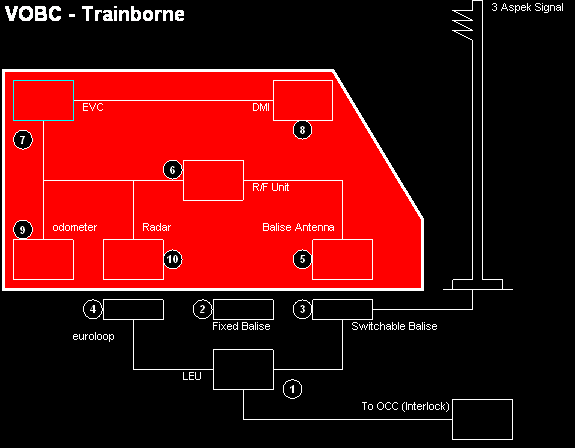
A CBTC system is a "continuous, automatic train control system utilizing high-resolution train location determination, independent from track circuits; continuous, high-capacity, bidirectional train-to-wayside data communications; and trainborne and wayside processors capable of implementing Automatic Train Protection (ATP) functions, as well as optional Automatic Train Operation (ATO) and Automatic Train Supervision (ATS) functions."

Friday, June 6, 2014

The Thermodynamic analysis on small scale coal-fired steam power plant using visual basic

Thermodynamic Analysis on a Small-Scale Coal-Fired Steam Power Plant (Visual Basic Implementation)
“The universe cannot be read until we have learned the language… It is written in mathematical language, and the letters are triangles, circles and other geometrical figures… Without these, one is wandering about in a dark labyrinth.”
— Galileo Galilei (1564–1642)

Overview
This note documents a compact Visual Basic application I built to perform thermodynamic performance analysis and simple optimization for a small-scale coal-fired steam power plant (CFSPP). The goal: provide engineers with a fast, transparent calculator that mirrors the way we think in a single-line heat-balance diagram, not a black box.

Model and Methods

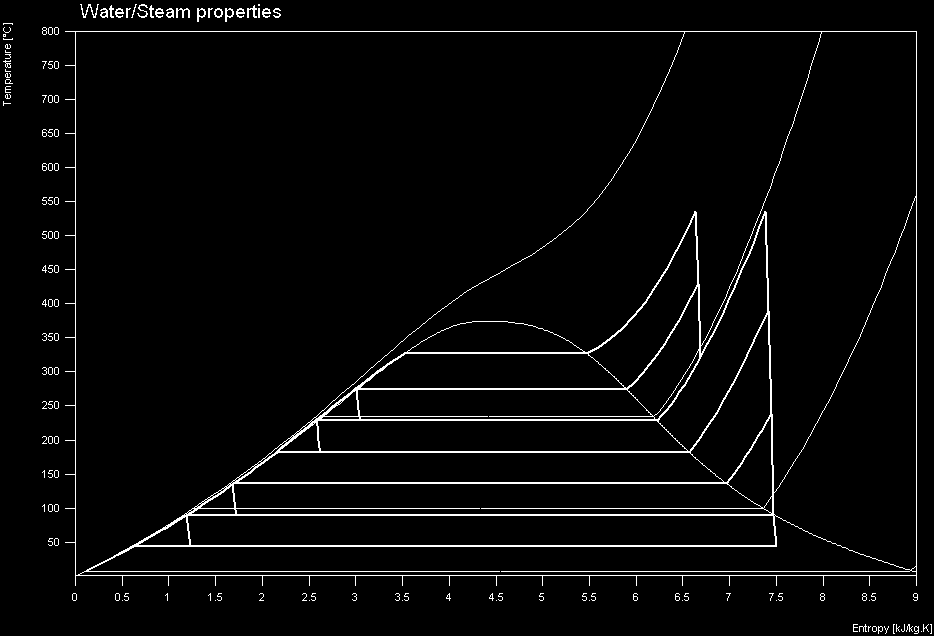
  1. Working fluid: water/steam properties from IAPWS-IF97 (Industrial Formulation, 1997).
  2. Cycle blocks: boiler, superheater, HP/LP turbines, reheater (optional), deaerator, condensate and feedwater heaters, condenser, and auxiliary drives.
  3. Core calculations: enthalpy/entropy states, mass & energy balances, component efficiencies (η_boiler, η_turbine_HP/LP, η_generator, η_pumps, η_pipe), and steam-flow splits.
  4. KPIs reported:
    • Gross / Net Power (kW)
    • Heat Rate – GPHR/NPHR (kCal/kWh)
    • Coal Specific Consumption (kg/kWh)
    • Cycle efficiency (thermal and net)
    • Major loss accounting (stack, condenser, unaccounted)

Input/Output Design
  • Inputs (left panel): pressures, temperatures, extraction fractions, isentropic efficiencies, auxiliary loads, and assumed losses.
  • Outputs (right panel): steam flows per branch (t/h), node enthalpies (kJ/kg), bus-level power, and performance KPIs.
  • Results are rendered back onto the diagram so each edit shows an immediate thermodynamic consequence.
Why Visual Basic?
  • Lightweight, fast to deploy on older Windows workstations in plants.
  • GUI-first; operators/engineers can type, run, and see without scripting.
  • Easy to lock assumptions and export snapshots for MoM/commissioning records.
Validation and Use
  • Property calls checked against IF97 tables; cycle results cross-checked with vendor heat balances and plant DCS snapshots.
  • Typical deviations: ±0.5–1.5% on key KPIs when inputs are aligned (measurement uncertainty dominates).
What It’s Good For
  • Quick what-if studies: turbine efficiency drift, condenser back-pressure rise, auxiliary load spikes.
  • Operator training: link a number change to a physical effect on the heat balance.
  • Pre-audit before deeper load-flow or CFD work.
Limitations
  • Lumped-parameter cycle (no detailed fouling/part-load curves unless supplied).
  • No combustion chemistry breakdown beyond assumed boiler efficiency.
  • Not a relay-level protection or dynamic stability tool—thermo balance first, transients second.

Closing
In Galileo’s spirit, this tool treats the plant as a geometric and numerical language—nodes, lines, and balances. Read the cycle in that language, and the labyrinth becomes a map.

(IAPWS-IF97 referenced; original VB build © 2010–2014.)

Friday, April 4, 2014

The god were anthropomorphic (human-like) in the beginning

Because mankind had no model but their own bodies, as to what the bodies of their imaginary supreme entities would look like. In the later epochs, closer to our era, the supreme overseers have come to be visualized as entities which are unseen, unheard, incomprehensible, distant, and omnipotent, because human reasoning in the meantime has started questioning the idea of an unseen, anthropomorphic, and at the same time an abstract god living amongst his subjects.

An imaginary divine realm up there as the abode of these invented beings was a face saving solution for the inventors (human beings): These supreme entities could not be not seen or heard because they don't share the same physical environment with the mankind, and they only communicate via the persons they choose. I call these intermediaries interfaces and/or modems, who are known by the populace as messengers or prophets. That's all there is to it.

Monday, March 3, 2014

System Logging and Debug Information

System log messages and debug messages can provide valuable information for in-depth troubleshooting of the system. Some considerations for their use are provided here:

  1. Logging to local buffer and to the syslog server can be used. Sufficient buffer size should be used to avoid overwriting of messages.

  2. Timestamps with millisecond accuracy should be enabled for analysis and correlation of events. NTP (Network Time Protocol) infrastructure is needed to keep the common clock between devices. In absence of NTP, system uptime format can be used as local reference.

  3. Severity level “Notification” is recommended for normal syslog operation. More detailed levels can be enabled on demand.

  4. Enabling debug commands on the Access Point or Workgroup Bridge can severely impact performance and disrupt the data traffic. In some cases, rebooting the Access Point is required. Debugging level should only be used by tech support during troubleshooting, and not to be left on during the normal operation.

  5. Detailed information for technical support can be obtained via web interface or Command Line Interface as a text file. It is recommended to keep a baseline copy of this information for each device.